Finding rest when my body insists

I am fighting a cold, and wishing I had a few days of nothing to do. I am imagining laying in bed and reading fiction – it’s been way too long since I’ve done that. Today had too much going on, so I struggled through what needed to be done, snuffling and foggy-brained. Tomorrow has work to do as well, but I am looking forward to a quiet day on Wednesday. Maybe not enough to read a novel, but enough to luxuriate in a day of rest.

Share

Gratitude for the sharing

The Advanced Mind-Body Medicine Training is done, and I am once again feeling grateful for the many places I have in my life where people take the risk to share with each other in a deep way. As the participants of this training return home with new insights, I wish them well in bringing what they have learned back to their lives and the people they touch.

Share

Tea in my hotel room

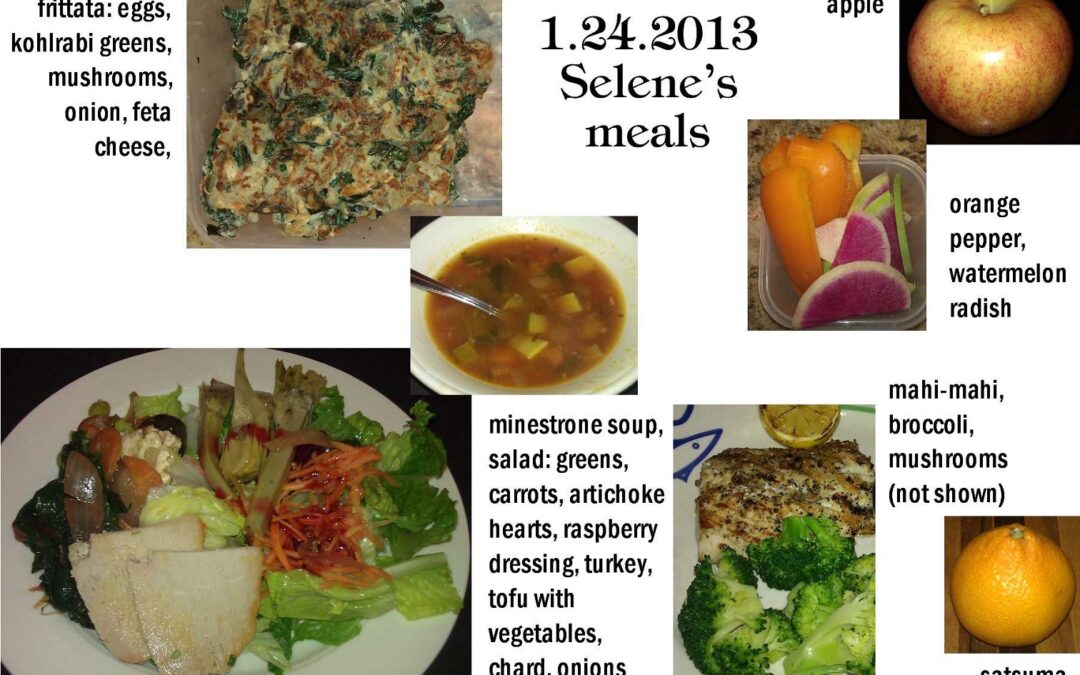
I don’t take photos of the tea I drink, but I do drink a lot of tea. I usually start the day with green tea, then have a yerba mate based tea later on, and sometimes something herbal. I bring plenty of tea bags when I travel, so I can have the kind I like. Here in the hotel, I make use of the coffee maker in the room to heat the water for tea in the morning before my movement practice, and at night as I’m winding down and putting together my food collage. It’s a simple ritual that helps provide a structure for quiet time with myself in the midst of a busy schedule.

Share

Everything changes when I travel!

Somehow travel helps me reset my eating process to listen more closely to what I really want and need. I am more finely tuned when I am away from home. Since I’ve been eating a bit more than I’ve needed to in the past month or so, I’m finding that I’m eating less right now. Of course, the excitement and adrenaline of traveling and teaching may be a contributing factor! But I am feeling very connected with my body right now, trusting that how I am caring for it, with food and with morning movement and workout, are supporting all that I’m doing.

Share

Winter Squash Minestrone Soup

As promised, a hearty winter soup. We enjoyed this as is the first night, then added veggie sausage after that, for more protein.

Winter Squash Minestrone Soup

1 tablespoon olive oil
221 grams onion , chopped
2 cloves garlic, minced
615 grams winter squash, peeled & cubed
179 grams carrots, chopped
116 grams parsnips, chopped
107 grams celery, chopped
453 grams potato, chopped
2 1/2 cups  vegetable broth
1 1/2 cups  water
138 grams kale, chopped
15 ounces can cannellini beans, rinsed and drained

Heat oil in a large soup pot on medium heat. Add onions and garlic and saute for 5 minutes. Add squash, carrots, parsnips, celery, potatoes, oregano, salt, pepper, broth, and water and cook for 10 minutes or until the potatoes are almost done. Add kale and beans and simmer another 8 minutes, until kale is tender and beans are hot.

Servings: 7
Yield: 3.5 quarts – 2 cup servings

Nutrition Facts
Calories 375.03, Total Fat 2.84g, Saturated Fat 0.47g, Cholesterol 0mg, Sodium 178.31mg, Potassium 2168.78mg, Total Carbohydrates 73.71g, Fiber 14.77g, Sugar 5.92g, Protein 18.25g

Source: originally from Moosewood Daily Specials. I added parsnips and vegetable broth.

Share

Preparing for the Rain

I was out and about the SF Bay Area yesterday, stopping for a meeting in Palo Alto, then picking up new business cards from Greenprinter in Berkeley and dropping in to visit friends before heading back. Then out again for a few more errands, getting what Rene’ needed for our washing machine repair adventure.

We’re trying to get everything done and ready for the predicted rain storm. Rene’ has been sweeping the driveway to clear the road of the rest of the debris downed in the last windstorm, over a month ago, and burning it. The washing machine is not the only repair going on right now – our main propane backup generator is down. We’ve been using the old, hand-pulled one for about an hour every other day to give us that bit of extra power to take us through on these still long nights, but in the rain, without sun on our solar panels, it will be every night. Not a great time for slow cooker recipes, but I will probably make some kind of hearty soup to sustain us through these cold, gray days. Recipe for that on the next post!

Share

Checking in

I am truly grateful that I have so many places where I can check in – with friends and family and colleagues who I love and respect and who love and respect me, and who care about what is going on with me. Not just the stories of what’s happening, but the thoughts and feelings and struggles and joys that I experience as I go through days and phases of my life. When I am with a group, all of us checking in, one by one, going around the circle to each speak what is true for us in that moment, in our lives right now, and being witnessed and held by that circle, I am grateful. And even more so when I hear from some in the circle, as is often the case, that this may be the only place this person has to speak and be heard in this way.

I am reminded of how much I value checking in even beyond my usual home groups that I rely on for this, having just returned from 2 days with the Saybrook College of Mind-Body Medicine residential conference. At this conference where we hold our new student orientation, and coursework for many of the MS and PhD students in the program, there is still room for check-ins. I am so grateful that check-ins are an important part of our work, along with the serious academic rigor of the research work. The best of both worlds!

I rely on the people in my life, the people in my communities, to hold a space for me that I feel even when I am not with them. Knowing I am held in this way, I can go forth and take action in the world, and I can come into my own center when meditating and/or moving alone, and know that I am not truly alone. This means a lot to me, and I thank all of you who are part of the larger community that I belong to. Just by reading this, just by being someone I have contact with in whatever small way, you are part of the community I belong to. In my meditations, I reach out my sense of community even beyond that, to those I don’t know, those I don’t understand, those I struggle with because of actions that they take that seem to me to be harmful to the earth and to other beings who live here. But what helps me to do that reaching beyond is knowing that I have a closer community to come back to, people to check in with on the simplest levels of what it is to live. Even as simple as sharing the food that I eat every day.

Share

Conference food

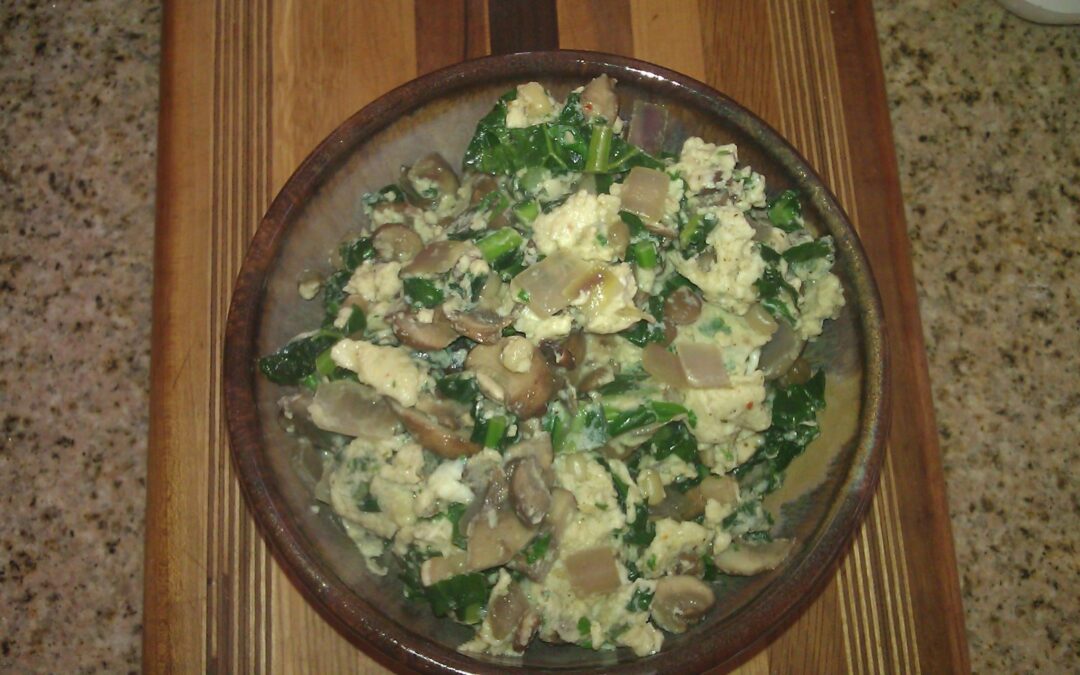
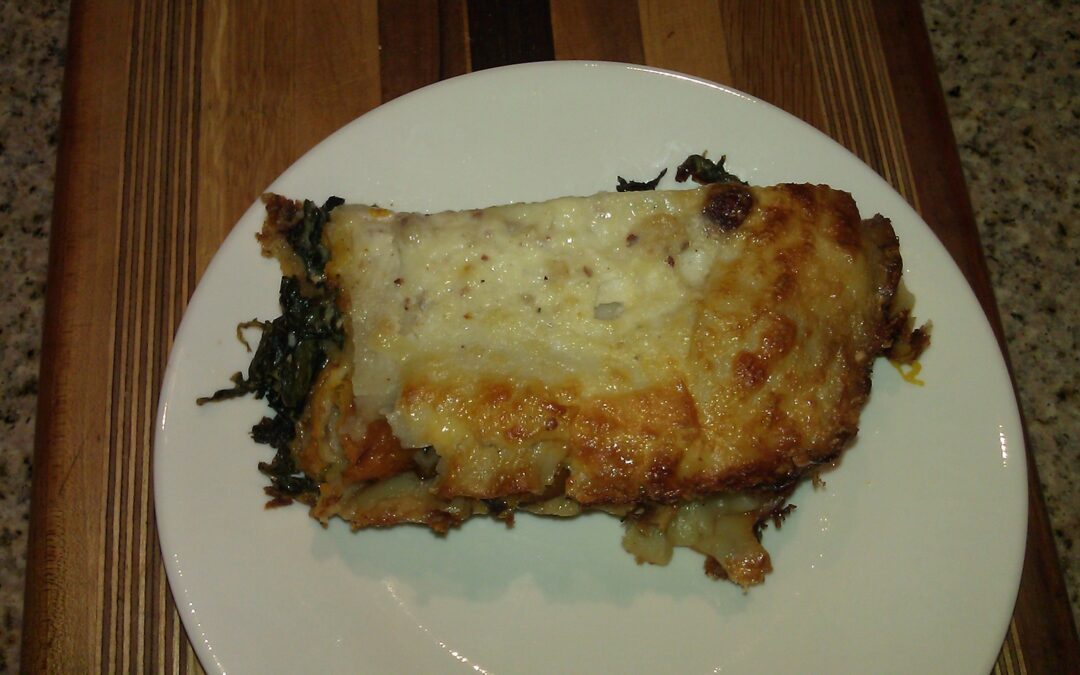
Some out of the norm days of eating for me. Lunch and dinner at Saybrook University’s residential conference, at the Westin near the San Francisco airport. Plenty of vegetables, which I appreciated, but I still was craving salad when I got home. I ate the salad I had prepared to eat with dinner the night before – and was too full to eat. Very glad to have that available as a night time snack!

Share

Cranberry Scones & Lemon Curd

I love scones, and though these are somewhat different than the ones made with white flour, I find them quite satisfying. Especially with lemon curd!

Cranberry Scones

2 1/2 cup whole wheat pastry flour
1/2 cup sucanat
2 teaspoons baking powder
1/2 teaspoon baking soda
1/4 teaspoon salt
4 tablespoons chilled butter
1 cup frozen cranberries
2 teaspoons grated orange peel
3/4 cup buttermilk

1. Combine first 6 ingredients in food processor. Add cut up pieces of butter and pulse until mixture resembles coarse meal. Add cranberries and orange rind and pulse a few times. Pour into a bowl and add yogurt, stirring just until dry ingredients are moistened.

2. Turn dough out onto lightly floured surface, and knead 4 or 5 times. Pat dough into an 8 inch circle and cut into 12 wedges. Place on baking sheet coated with cooking spray.

3. Bake at 450°F for about 12 minutes.

Servings: 12

Calories 159.76, Calories From Fat (24%) 38.94, Total Fat 4.45g , Saturated Fat 2.6g, Cholesterol 10.79mg, Sodium 201.2mg, Total Carbohydrates 28.29g, Fiber 3.51g, Sugar 9.21g, Protein 4.01g

Lemon Curd

I used to make the lemon curd from Bread, by Beth Hensperger, then used a recipe from Cooking Light that was a bit lighter in fat and just as good. Now I’ve reduced the sugar even further.

1 cups sugar
2 Tbs lemon rind, freshly grated
4 large eggs
1 1/3 cups fresh lemon & lime juice
4 Tbs unsalted butter

1. Combine sugar, lemon rind, & eggs in a saucepan over medium heat, stirring with a whisk. Cook until sugar dissolves and mixture is light in color (about 3 minutes). Stir in butter and lemon juice, cook until mixture thinly coats the back of a spoon, stirring constantly. Pour into 1/2 pint jars and cover. Cool and store in refrigerator.

Servings: 48
Yield: 3 cups (serving=1 Tblsp.)

Calories 32.42, Calories From Fat (38%) 12.17, Total Fat 1.37g, Saturated Fat 0.74g, Cholesterol 20.17mg, Sodium 6.04mg, Potassium 15.14mg, Total Carbohydrates 4.84g, Fiber 0.03g, Sugar 4.37g , Protein 0.56g

Share

Ponderings on my path

A student wrote asking me about the training, experiences, career choices, realizations that have brought me to my present work. As I began my response, I realized that I had written some of this already, and that perhaps others might be interested as well. So, after a bit of updating, a very non-food oriented blog post about my work, past and present.

My mother was a dance teacher, and my earliest memories involve toddling through her dance classes. My dance focus receded into the background from the age of five through ten as divorce shook my world and left me living in an emotionally difficult situation with my father for several years. Returning to life with my mother and the stabilizing influence of my stepfather, I begged my mother to start teaching dance again, which she did. It was my stepsister who introduced me to theatre classes and productions, which had an enormous impact on my way of being in the world, opening up my shyness to new possibilities. As my mother’s dance school grew and morphed into an arts center run by my stepfather, with artists-in-residence, students, and dance and theatre teachers surrounding me, I lived two almost separate existences – the dancer and the consciousness explorer.

When I was eleven years old, I went to a slumber party where our group of prepubescent girls spent hours into the night ‘hypnotizing’ each other. I had never seen anything like this and couldn’t tell how much was real and how much was just ‘faking.’ Already at that age my critical mind worked in high gear, often keeping me from experiencing because I was so busy analyzing. But there was enough in what I saw that night to leave me wondering. I was fascinated by the idea of non-ordinary states of consciousness allowing us to access deeper parts of the mind.

I spent many hours reading science fiction, especially stories involving psychic skills. Not content with fiction, I searched for ways to develop my own psychic abilities. I was intrigued by the idea of astral travel, ready to get ‘out of the body’ and have adventures in other realms. I began experiments with self-hypnosis, meditation, and visualization techniques, applying myself to these practices with much the same zeal that I brought to my training as a dancer. I’m grateful to whatever drove me to begin self-development training at this early age, as it became a foundation I drew from in struggling through adolescence and early adulthood. What began as an attempt to gain some control in my turbulent life led me along a path into spiritual connection and an ongoing dance towards consciousness.

After graduating high school, I ricocheted back and forth for a few years between the dance world, which I found unsatisfying, and the world outside the arts, in which I couldn’t find a meaningful place. There were several dance teachers who saw my struggle and encouraged me to explore the edges of spirituality and dance, notably Laura Dean, and Sara Shelton Mann, both of whom were working on those edges themselves.

Teaching dance in a program introducing ghetto kids to the arts, I had a revelation. These kids were not interested in dance technique, and in my attempt to find ways to turn them on to their own bodies, their own rhythms, their own creative possibilities, I found what I’d been missing in the arts world. I discovered my interest is in the arts as a means of expression, exploration, connection with each other, and connection with the realms of spirituality.

From that program I explored further experiments in dance/theatre as ritual, looking to other cultures where dance and the arts are an integral part of daily life. I searched for ways not to duplicate the rituals of other cultures, but to create time and place appropriate applications of those ideas to my life, my culture. Realizing that my intuitive work could be enhanced by further knowledge, I returned to university, taking the classes that I felt would help me to understand what I was doing, and seeking out the teachers I needed.

Several professors at UCSC were mentors to me in my process of putting all the pieces together, and I am grateful to each for their part in my growth, and to the university for allowing me to learn from them in such individual ways. Stuart Schlegel, an anthropologist who was enthusiastic and encouraging to me, modeled a non-patronizing approach to learning not just about but from other cultures. Stuart steered me to Noel King, who invited me to speak to his History of Religions classes and headed my thesis committee. Through his deep understanding of my work, he mirrored for me a sense of the authenticity of my path. Frank Barron guided me through an individual study in the Psychology of Mysticism that took me beyond the classics and into the more specific materials that illuminate my work with movement. Philip Slater mentored me as I taught my first cycle of the class I developed, “Movement Explorations: Experiments in Ritual,” and helped me navigate through all the interesting issues that emerge in improvisational group process. My B.A. in Ritual and the Arts in Cross-Cultural Perspective was the result of all that, and I continued to evolve my teaching and ritual-creating over the years as I found studies that grew and supported the skills I needed to do my work, as well as learning from my own observations in my teaching and my practice.

Teaching Movement Awareness in a residential addictions program, I was once again struck by how powerful it can be to bring what I have to offer to those who wouldn’t ordinarily take my classes. My desire to be a more integral part of the treatment team led to my M.A. in Clinical Psychology and an MFT license. Along that path, I found that the psychotherapeutic work I could do with individuals and couples was profound and meaningful. I was somewhat sidetracked by that work for about thirteen years, while my teaching and ritual work became secondary process, just enough to remind me of the transformational possibilities of a group coming together in temporary community to do work on themselves together, and of the role I can play in facilitating that work.

Over my years of teaching movement/trance/ritual I’ve found this approach to be an extremely effective means to provide direct experience of something that I (or someone else) is attempting to teach through a more didactic approach. One profound application of my work has been my collaboration with Anodea Judith in teaching the chakra system. Realizing that her first book was reaching people only on an intellectual level, we co-created a nine-month intensive that provided experiential understanding of the chakras. I’ve been an adjunct in several fields in this way, introducing students to experiential ways to understand and approach Ecopsychology, Spiritual Emergence, Addictions, Eating Disorders, Ethics, and general therapeutic skills.

In 1999 I found my way to Stephen Gilligan, in my continuing effort to strengthen and broaden my skills. My approach to movement takes participants into trance first, to allow the movement that emerges to bypass some of the usual internalized censors that structure our movements in socially acceptable ways. In seeking more formal training in hypnosis/trancework with Steve, I discovered Self-Relations Psychotherapy, a wonderful framework and language to describe much of the work I do. My movement work is also an excellent way to teach and illustrate some of the principles of the Self-Relations model, and I see myself continuing to bring these two together.

My husband’s career path took a twist that brought us to the Seattle area, which allowed me to take a semi-sabbatical from my role as psychotherapist and pursue a PhD at Saybrook University, furthering my knowledge and understanding of my work, and researching some areas of particular interest. My dissertation was a multiple case study exploration of the challenges of integrating transformative workshop experiences into daily life. I continue to explore the process of creating the context for those transformative experiences to occur, and assisting people in bringing their new perspectives and sense of identity into their lives.

For my teaching at the Institute of Transpersonal Psychology I was asked to state my philosophy of teaching. I realized that although I have a strong sense of what is important to my teaching, I had not articulated that in writing. Though it continues to evolve, this is my current understanding of what, at our best, we are doing as teachers, therapists, coaches, or just in connecting with others in daily life:
I believe that when we work with others what is most important is presence. As practitioners do their own inner work and become more present to themselves, they can share that presence with those they work with. We can learn theory and techniques, but they are bound into the art of our work by our own presence. My task as teacher is to provide opportunities for education, learning, and the development of presence. I think of education as the transference of information that will give students an intellectual understanding of the material, while learning is something that I can only midwife, creating a context in which exploration and inquiry can occur and participants can experience the next step of their process of integrating and synthesizing.

May we all continue that ongoing process of exploration, inquiry, integration, and synthesis!

Share